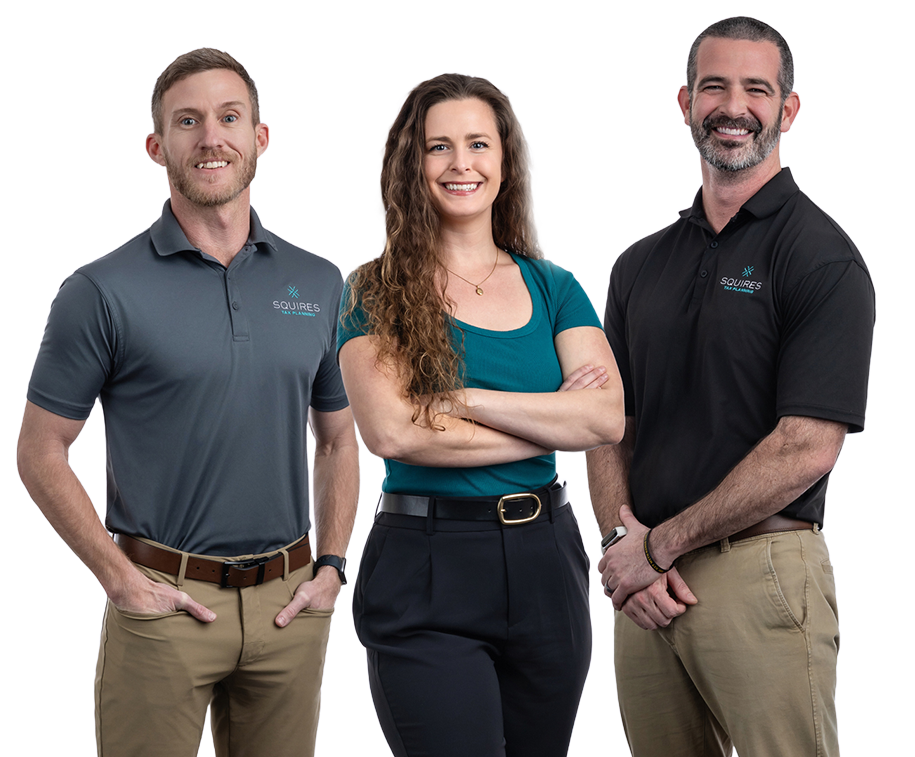
Smart Tax Planning for High-Income Professionals

High-income professionals often pay far more in taxes than necessary.
Whether you’re a top W-2 earner, an executive, or running a thriving practice, we help you reduce taxable income, maximize deductions, and protect your wealth with proactive planning.
The Hidden Cost of Success
Reaching higher income levels is an achievement worth celebrating, but with it comes higher tax brackets, phase-outs of deductions, and often, the Alternative Minimum Tax.
Without proper planning, much of your hard-earned money goes straight to the IRS. At Squires Tax Planning, we help ensure success doesn’t come with an unnecessary price tag.
Why High-Income Professionals Need Proactive Planning?
Unlike average taxpayers, professionals at your level face unique challenges—limited deductions, complex compliance, and fewer tax shelters.
Traditional CPAs often prepare returns but don’t plan ahead. That’s where we’re different. Our proactive tax strategies are designed to protect high earners from overpaying and to provide clarity year after year.
Our extensive experience in both tax strategy and financial planning allows us to deliver highly tailored solutions that fit the unique goals, challenges, and needs of each client.

Our Approach to Lowering Your Tax Burden
Proactive tax strategies and clear guidance to protect your wealth and grow your financial future.

Our Mission is Simple
We help clients reduce their tax burden, gain clear financial insight, and strategically build lasting wealth with tailored strategies that support long-term goals and financial success.
We Promise Every Client
We provide proactive, ethical strategies that guide clients, protect wealth, and create long-term financial confidence, clarity, and lasting financial security and success.
Strategies That Work for High-Income Professionals
Advanced Retirement Plans
Whether it’s a 401(k), SEP IRA, or Cash Balance Pension Plan, we help you reduce today’s taxable income while building a strong foundation for long-term retirement security.
Augusta Rule
By applying the Augusta Rule, you can rent your residence up to 14 days per year tax-free, creating deductions and reducing taxable income without adding complexity to your finances.
Entity Restructuring
Switching to an S Corporation or efficient entity structure allows high-income professionals to reduce self-employment taxes while protecting earnings and keeping more money in their pockets.
Tax-Efficient Investments
We guide clients toward investments that generate returns and deductions, creating tax-efficient cash flow that builds wealth while reducing overall liability year after year.
See the Measurable Results Our Clients Achieved Through Strategic Tax Planning.

Turning Passive Losses into $20K+ in Savings
Texas veterinarians turned passive losses into $20K+ tax savings—outperforming higher-priced planners.
Smart Strategy Secures Dream Home
A Missouri video marketing company secured their dream home by adding $37K while paying just $2.2K more in taxes.
$10K Saved with S-Corp Strategy
A consulting agent in Missouri saved $10K in the first year by shifting to an S-Corp with proactive tax planning.
Real Results — Proven Client Savings
Squires Tax Planning has done such a great job for me as a small business owner. They helped me create a strategy that literally saved me thousands in taxes each year for the last five years. The prices are totally fair, especially considering the money and time saved.
The team is extremely knowledgeable and helpful. They found additional tax credits for my business that I wasn’t aware of. They’ve got my business from here on out.
Squires Tax Planning is so knowledgeable and strategic that they turned our tax situation into opportunities we didn’t know existed. I now feel confident that we’re keeping more of our hard-earned money.
Taxes Don’t Have to Take So Much.
Do high-income professionals really need specialized tax planning?
How is proactive tax planning different from tax preparation?
What strategies do you use for high-income earners?
I already have a CPA—do I still need you?
How much can I expect to save?
Take the First Step Today